Florida Estate Planning Documents Explained: What You Actually Need
A Practical Guide for Pasco and Hernando County Families
Estate planning in Florida is not a single document and it is not a one-time task. Florida law recognizes a set of distinct legal instruments, each governed by its own statutory rules, each designed to function at a specific moment: during life, during incapacity, or after death.
Families in Pasco and Hernando Counties often assume estate planning means “having a will.” In reality, a will is only one piece of a broader legal framework. When documents are missing, outdated, or inconsistent, Florida courts must step in to apply statutory defaults. Those defaults are predictable, but they are rarely what families expect.
This guide explains the core estate planning documents recognized under Florida law, what each document actually does, and why incomplete planning so often leads to probate delays, guardianship proceedings, or litigation.
How Florida estate planning is structured under the law
Florida estate planning is governed by multiple chapters of the Florida Statutes, each addressing a different function:
- Chapter 732 governs wills and intestate succession
- Chapter 736 governs trusts
- Chapter 709 governs powers of attorney
- Chapter 765 governs advance directives for healthcare
- Chapter 733 governs probate administration
No single document replaces the others. Each operates independently, and Florida courts interpret them together when conflicts arise.
The Last Will and Testament: what it does and what it does not
A Last Will and Testament is governed by Chapter 732 of the Florida Statutes. Its primary legal functions are narrow but critical:
- It directs how probate assets are distributed
- It nominates a personal representative
- It can nominate guardians for minor children
A will does not avoid probate. In Florida, a will is a document that is validated through probate, not a substitute for it.
Why wills still matter in Pasco and Hernando Counties
When a Florida resident dies without a valid will, the estate passes according to Florida’s intestacy statutes, not family preference. Courts apply those statutes mechanically. The result is often:
- asset distribution that surprises families
- appointment of a personal representative based on statutory priority
- increased court involvement when relatives disagree
A properly executed will does not shorten the probate timeline by itself, but it reduces disputes, which is one of the largest drivers of probate delay in both Pasco and Hernando courts.
Revocable living trusts: control and continuity, not automatic probate avoidance
Revocable trusts are governed by Chapter 736 of the Florida Statutes. A revocable trust allows a person to place assets into a trust during life, retain control, and designate how those assets are managed and distributed.
A critical point Florida courts consistently enforce:
A trust only controls the assets that are actually titled into it.
What revocable trusts are used for
- Managing assets during incapacity
- Avoiding probate for assets properly funded into the trust
- Providing continuity if court supervision is undesirable
What revocable trusts do not automatically do
- They do not protect assets from creditors during the settlor’s lifetime
- They do not eliminate estate administration entirely
- They do not control assets never transferred into the trust
In Pasco and Hernando County probate cases, unfunded or partially funded trusts are a common source of confusion and litigation. Courts must then determine which assets remain probate property and which do not.
Durable Power of Attorney: financial authority during life
Powers of attorney in Florida are governed by Chapter 709. A durable power of attorney authorizes another person to act on your behalf for financial and legal matters during your lifetime.
Florida law is strict about these documents. Authority must be expressly granted, and certain powers require specific statutory language.
Why this document is foundational
Without a valid durable power of attorney, families often have no legal authority to manage finances if someone becomes incapacitated. The alternative is frequently a court-supervised guardianship, which is expensive, public, and restrictive.
In Pasco and Hernando counties, guardianship proceedings are handled through the circuit court and involve ongoing judicial oversight. A properly executed durable power of attorney is one of the primary tools Florida law provides to avoid that outcome.
Living will and healthcare surrogate: medical decision-making under Florida law
Advance healthcare directives are governed by Chapter 765 of the Florida Statutes. Florida separates medical planning into two distinct documents:
Living Will
A living will expresses wishes regarding life-prolonging procedures in narrowly defined medical circumstances, such as terminal conditions or persistent vegetative states.
It does not:
- appoint a decision-maker
- control routine medical care
- address financial matters
Designation of Healthcare Surrogate
This document appoints a person to make healthcare decisions when the principal cannot. It fills the gap the living will does not cover.
Florida courts treat these documents as complementary, not interchangeable. When one exists without the other, medical decision-making authority can become unclear at precisely the wrong moment.
HIPAA authorization: access, not authority
HIPAA authorizations are often overlooked, but they are critical in practice. They allow designated individuals to receive medical information, even when they do not yet have decision-making authority.
Without proper authorization, family members may be unable to access information needed to coordinate care or make informed decisions, even when they believe they “have the right” to do so.
Beneficiary designations and non-probate transfers
Florida law recognizes that some assets pass outside probate by operation of contract or title. Common examples include:
- life insurance
- retirement accounts
- payable-on-death or transfer-on-death accounts
- jointly owned property with rights of survivorship
These assets are controlled by the beneficiary designation, not by the will.
In Pasco and Hernando estates, outdated or inconsistent beneficiary designations are a frequent source of litigation, especially when they conflict with later estate planning documents.
What happens when estate planning is incomplete or inconsistent
When documents conflict or are missing, Florida courts do not “guess” intent. They apply statutes.
Common outcomes include:
- probate assets distributed under intestacy law
- court-appointed guardians
- litigation between beneficiaries
- extended probate timelines due to objections and hearings
These outcomes are not punishments. They are the legal defaults Florida law provides when private planning fails.
Local considerations for Pasco and Hernando County residents
Florida estate law is statewide, but administration is local.
- Probate cases in Pasco are handled through the Sixth Judicial Circuit
- Probate cases in Hernando are handled through the Fifth Judicial Circuit
Court scheduling, filing practices, and judicial expectations vary. Estate plans that are clear, complete, and internally consistent reduce the likelihood that local procedural issues become substantive legal problems.
The practical takeaway
Florida estate planning is not about volume. It is about coverage.
Most effective plans include:
- a will or trust (or both)
- a durable power of attorney
- healthcare directives
- properly aligned beneficiary designations
- documents that reflect Florida statutory requirements
When these pieces work together, families experience fewer disputes, fewer court interventions, and more predictable outcomes.
For families in Pasco and Hernando Counties who want estate planning grounded in Florida statutes and local court practice, Gary Cors focuses on building plans that hold up not just on paper, but in probate court if they are ever tested.
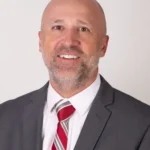
Gary Cors, a Florida native educated at USF and Stetson Law, has practiced wills, trusts, estates, probate, and real estate since 1999 while also teaching in Pasco-Hernando State College’s Paralegal Program.